
Monterey Bay Aquarium: The Complete Visitor Guide
Everything you need to know about visiting the Monterey Bay Aquarium — sea otters, kelp forests, the open ocean, and tips for an unforgettable California coastal experience.
On the Edge of the Pacific
Built directly on Monterey Bay — the aquarium pumps in fresh ocean water and sits above a protected marine sanctuary.
The Living Kelp Forest
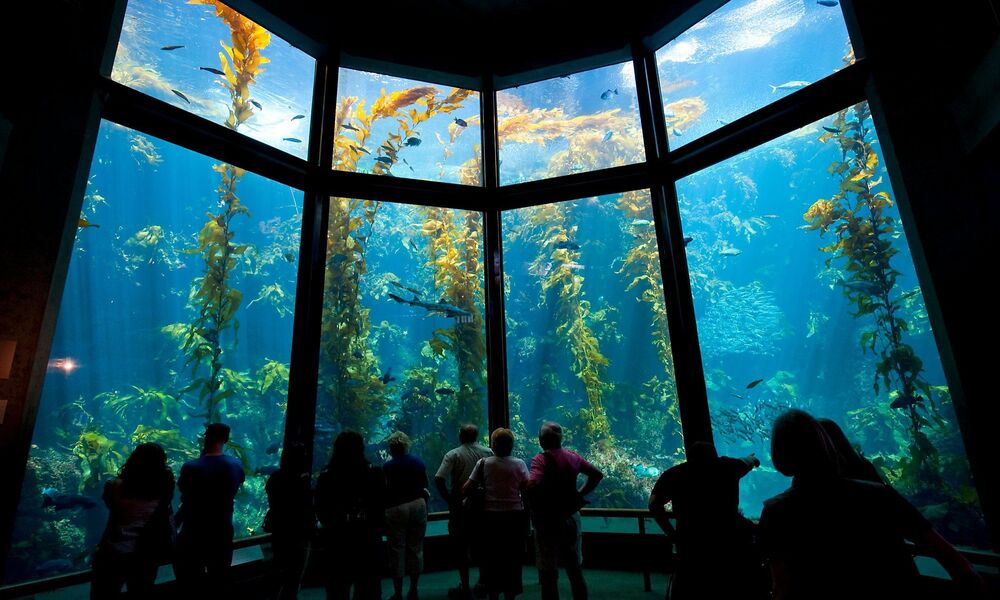
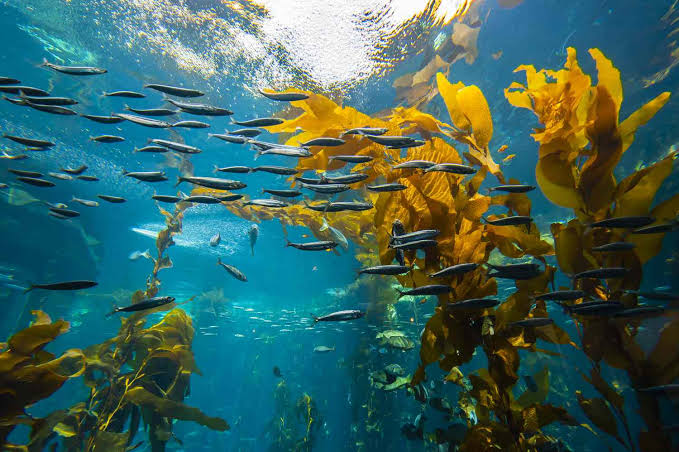
The first successful living kelp forest exhibit in the world — 28 feet tall with leopard sharks and sardines swimming through swaying fronds.
Rescued Sea Otters
A pioneering sea otter surrogacy program that rescues orphaned pups and pairs them with surrogate mothers for release.
Interactive Family Exhibits
Touch pools, splash zones, and a dedicated family learning center with hands-on ocean science activities.
Global Ocean Conservation Leader
Seafood Watch, climate action, and deep-sea research — the aquarium's influence extends worldwide.
- Marine Life Exhibits: 10/10
- Atmosphere & Location: 10/10
- Family Appeal: 9/10
- Value for Money: 7/10
- Location: Monterey, California — on Cannery Row, about 120 miles south of San Francisco
- Opened: October 20, 1984 — funded by David and Lucile Packard
- Hours: 10:00 AM – 5:00 PM (extended hours in summer and during holidays)
- Admission: Adults $60, Children $40 (online reservations required; discounts for groups and members)
- Best For: Families, couples, marine life lovers, California road-trippers
- Highlight: The Kelp Forest — the first living kelp forest exhibit in the world and still one of the most mesmerizing aquarium experiences anywhere
An Aquarium on the Edge of the Ocean — Monterey Bay's Living Laboratory
The Monterey Bay Aquarium occupies a former sardine cannery on the edge of the Pacific Ocean, and that location defines everything about it. Unlike inland aquariums that manufacture their saltwater, Monterey Bay pumps millions of gallons of fresh ocean water directly from the bay into its exhibits. The water temperature fluctuates with the seasons. Plankton and microscopic life from the open ocean drift into the tanks. The aquarium is not just displaying marine life — it is continuously connected to the living ecosystem just outside its walls.
This direct connection to the ocean creates a dynamic environment that mirrors the natural conditions of Monterey Bay. The water intake system draws from depths where the bay’s cold, nutrient-rich currents flow, bringing with them the same chemistry and microscopic organisms that sustain wild populations. This means the aquarium’s residents experience the same seasonal temperature shifts, phytoplankton blooms, and water quality variations as their counterparts in the open ocean. It’s a living laboratory where the boundary between captivity and wild habitat blurs in ways few other aquariums can replicate.
The filtration and circulation systems process approximately 2,000 gallons per minute, maintaining a constant flow that keeps the water fresh and oxygen-rich. This approach requires sophisticated engineering to balance natural seawater intake with the controlled environment needed for animal welfare. The aquarium’s staff monitors water quality continuously, adjusting flow rates and filtration to match the bay’s changing conditions while protecting sensitive species from extreme fluctuations or harmful algal blooms.
Opened in 1984 with funding from David and Lucile Packard of Hewlett-Packard, the aquarium was built on Cannery Row — the historic waterfront made famous by John Steinbeck’s novel. The architects preserved the cannery’s industrial character while creating soaring glass-walled galleries that frame views of the bay. The result is an aquarium that feels inseparable from its setting.
David Packard’s daughter, Julie Packard, served as the aquarium’s executive director for decades and remains deeply involved in its conservation mission. The Packard family’s vision extended beyond creating a tourist attraction — they wanted an institution that would inspire ocean conservation and advance marine science. The aquarium’s founding coincided with growing awareness of ocean pollution and overfishing, and its mission was deliberately crafted to address these challenges through education, research, and advocacy.
The building’s design by architect Joseph Esherick respected the industrial heritage of Cannery Row while introducing modernist transparency. The exposed steel beams, concrete floors, and utilitarian features of the old Hovden Cannery were integrated with massive glass walls that dissolve the barrier between indoor exhibits and the bay beyond. Visitors standing in the Great Tide Pool can watch wild sea otters swimming outside while observing resident otters inside — a juxtaposition that emphasizes the aquarium’s connection to its natural surroundings.
The exhibits focus almost exclusively on Monterey Bay and the California coast. The Kelp Forest is the aquarium’s masterpiece — a 28-foot-tall living kelp forest, the first ever successfully maintained in captivity. Leopard sharks, rockfish, and schools of sardines move through the swaying fronds while sunlight filters down from above. The Open Sea gallery features a 90-foot window into a million-gallon pelagic exhibit with tuna, sea turtles, and hammerhead sharks. The sea otter exhibit is home to rescued otters that cannot survive in the wild, and the aquarium’s pioneering surrogacy program matches orphaned pups with adult females who teach them to survive — a model now being adopted globally.
The decision to focus on local ecosystems rather than exotic species from distant oceans was revolutionary in the 1980s. Most major aquariums showcased tropical reefs, penguins, and other crowd-pleasing animals from around the world. Monterey Bay bet that visitors would find beauty and fascination in the cold-water species living right outside the building. That bet paid off spectacularly. The kelp forest exhibit proved that temperate marine ecosystems could be just as captivating as coral reefs, and the aquarium’s success inspired a generation of regional aquariums focused on their local waters.
The kelp itself is harvested from the wild and planted in the exhibit, where it grows rapidly in the nutrient-rich pumped seawater. Divers trim the kelp regularly to prevent it from overwhelming the tank, and the cuttings are composted or fed to other animals. The exhibit’s design allows natural sunlight to penetrate from above, creating the dappled light patterns that define kelp forest ecosystems. Fish species are chosen to represent the diversity of Monterey Bay’s kelp forests — from tiny señoritas that clean parasites off larger fish to prowling leopard sharks and the occasional giant sea bass.
The Open Sea gallery represents a different technical achievement. Pelagic species like tuna and sharks are notoriously difficult to keep in captivity because they require vast spaces and constant motion. The million-gallon tank uses a circular current that allows tuna to swim continuously at high speed without colliding with walls. The exhibit’s design creates the illusion of infinite blue water, with minimal structure visible to visitors. The animals appear and disappear into the depths, mimicking the experience of diving in the open ocean.
The aquarium is also a force in ocean conservation. Its Seafood Watch program has transformed how consumers and businesses choose sustainable seafood. Its scientists study deep-sea ecosystems, climate change impacts, and marine protected areas worldwide. A visit to Monterey Bay Aquarium is both a beautiful experience and an education in why the ocean matters.
Seafood Watch, launched in 1999, publishes science-based recommendations that rate seafood choices as “Best Choice,” “Good Alternative,” or “Avoid” based on sustainability criteria including fishing methods, bycatch levels, and population health. The pocket guides and smartphone app are used by millions of consumers and have influenced purchasing decisions by major retailers and restaurant chains. When a species is listed as “Avoid,” fisheries and aquaculture operations often respond by improving practices to earn a better rating, creating a market-driven incentive for sustainability.
The aquarium’s research extends far beyond its walls. Scientists affiliated with the Monterey Bay Aquarium Research Institute (MBARI), a separate but related organization also founded by David Packard, have pioneered remotely operated vehicle (ROV) technology to explore the deep sea. Discoveries include new species, previously unknown behaviors, and insights into how deep-sea ecosystems function. The aquarium’s own research team focuses on sea otter recovery, white shark behavior, ocean acidification impacts on marine life, and the effectiveness of marine protected areas along California’s coast.
Educational programs reach hundreds of thousands of students annually through school visits, outreach programs, and online resources. The aquarium’s Teen Conservation Leaders program trains high school students to become ocean advocates, and its teacher professional development workshops equip educators with tools to teach marine science effectively. These efforts reflect the founding vision that inspiring the next generation of ocean stewards is as important as displaying animals.
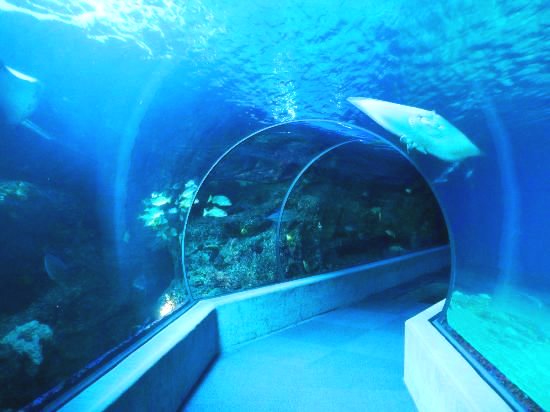
Must-See Exhibits at Monterey Bay Aquarium
From the towering kelp forest to the open ocean — these are the exhibits that make Monterey Bay one of the world’s great aquariums.
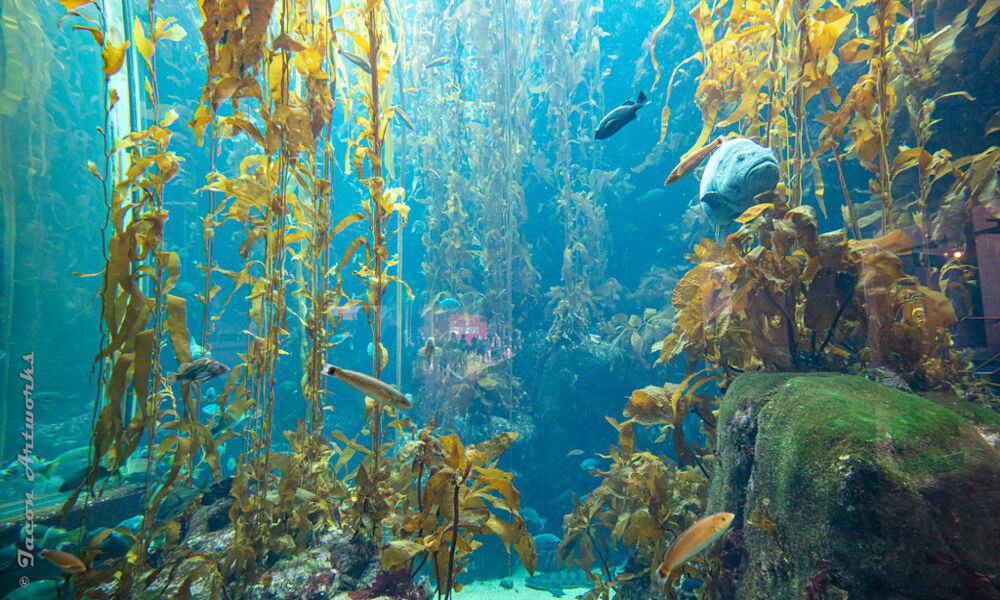
Kelp Forest
The world's first living kelp forest exhibit, 28 feet tall. Leopard sharks glide through the fronds. Sardines flash in the light. A diver enters the tank twice daily for feedings and can answer questions through a communication system.
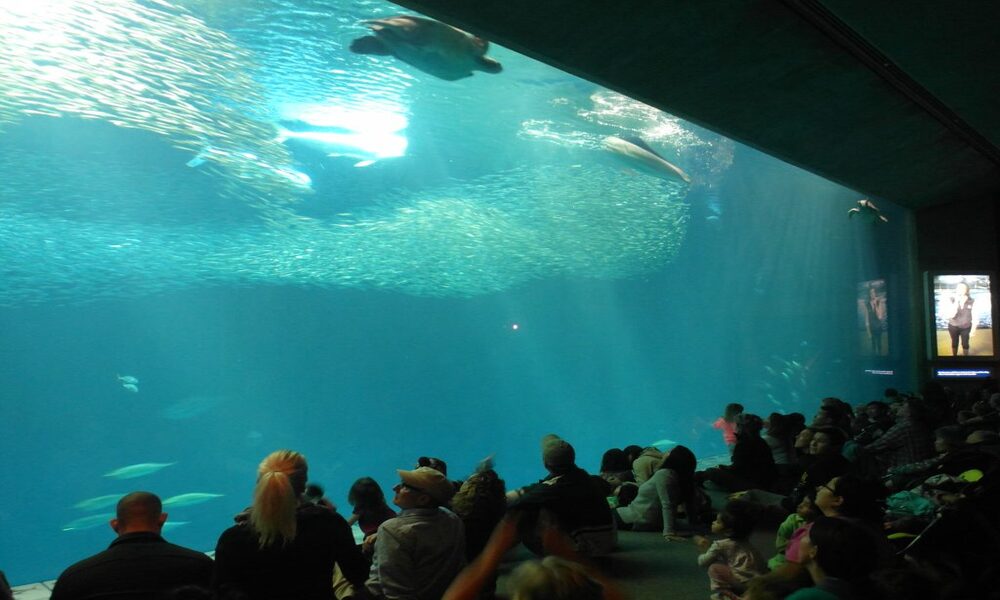
Open Sea
A million-gallon pelagic exhibit with a 90-foot viewing window. Yellowfin tuna streak past at speed. Hammerhead sharks cruise the depths. Sea turtles drift through the blue. The scale is breathtaking.
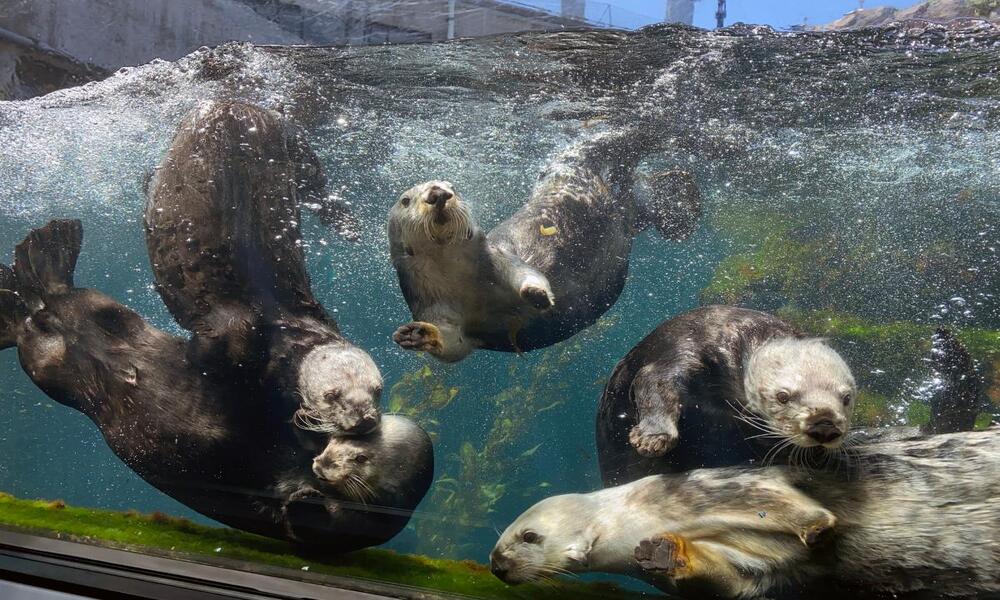
Sea Otters
Rescued southern sea otters that cannot return to the wild. Watch them play, groom, and crack open clams on their chests. The otter feedings and training sessions are scheduled daily and draw crowds.
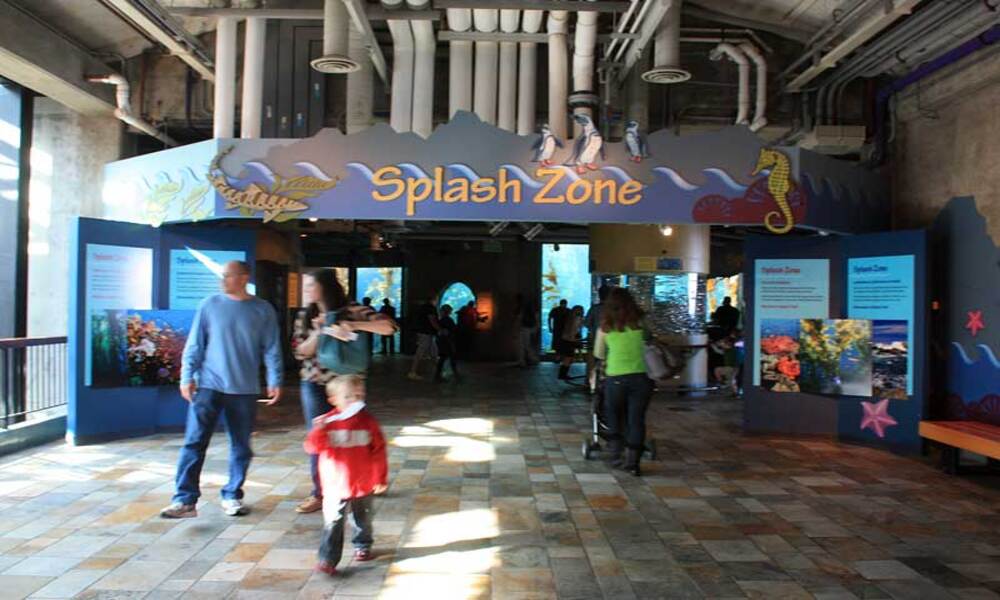
Splash Zone & Family Learning
Interactive touch pools, a penguin colony, and hands-on science exhibits designed for children. Touch bat rays, sea stars, and hermit crabs. The crawl-through tunnel under the wave exhibit is a kid favorite.
Monterey Bay Habitats
Exhibits devoted to the local ecosystem. A walk-through aviary with shorebirds, touch pools with bat rays and skates, and a sandy bottom exhibit with halibut and flatfish that camouflage into the floor.
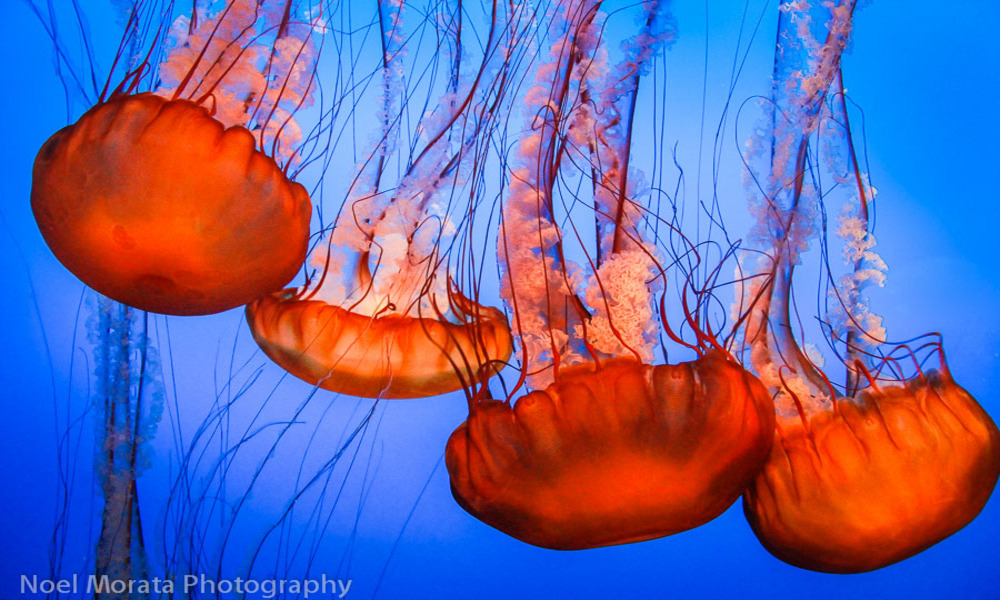
Tentacles & Jellies
A rotating gallery of cephalopods and jellyfish. Octopuses, cuttlefish, and glowing jelly species from around the world. The exhibits are designed like art installations, with dramatic lighting and minimal distraction.
Monterey Bay Aquarium Strategy: Tickets, Timing, and Pro Tips
The Monterey Bay Aquarium requires timed-entry reservations for all visitors. Buy tickets online well in advance — the aquarium frequently sells out, especially on weekends, during summer, and during Monterey’s major events like Car Week and the Pebble Beach Concours d’Elegance. Morning time slots are the quietest. Afternoons are busier. The aquarium does not limit how long you can stay once inside.
Ticket prices are structured by age: adults, youth (13-17), children (3-12), and seniors (65+). Children under three enter free. Members receive unlimited admission plus discounts and special access. If you plan to visit more than once within a year, membership often pays for itself. Peak season pricing (summer and major holidays) is higher than off-season rates. Military members, teachers, and EBT cardholders receive discounted admission with valid identification, though availability may be limited during peak times.
Booking morning entry slots — particularly the 9:00 or 9:30 AM openings — gives you the aquarium at its calmest. Crowds build throughout the day, peaking between noon and 3:00 PM. Late afternoon entry slots (after 3:00 PM) offer a compromise: smaller crowds than midday, but still enough time to see everything before closing. The aquarium’s policy of not limiting length of stay means early arrivals can spend four to six hours exploring at a leisurely pace without feeling rushed.
Weekdays outside of summer vacation and school breaks are significantly less crowded than weekends. If your schedule allows flexibility, visiting on a Tuesday or Wednesday in May, September, or October offers the best experience. Avoid visiting during Monterey Car Week in mid-August, when the entire peninsula is packed with tourists attending automotive events. Similarly, the Pebble Beach Concours d’Elegance weekend draws enormous crowds, and accommodations become scarce and expensive.
The aquarium is built on two main floors connected by stairs and elevators. The exhibits are arranged roughly in a loop. Start at the Kelp Forest on the second floor, then move through the Open Sea gallery. Head downstairs to the Monterey Bay Habitats and Splash Zone. The sea otter exhibit is centrally located and visible from multiple levels. The layout rewards a flexible approach — exhibits are close together, and wandering is part of the experience.
Accessibility is excellent throughout the facility. Wheelchairs and mobility devices navigate easily, with ramps and elevators connecting all levels. Wheelchair and stroller rentals are available at the entrance. Quiet spaces are designated for visitors who need sensory breaks, and staff are trained to assist guests with varying needs. Service animals are welcome, though emotional support animals are not permitted due to potential stress on aquarium residents.
The second floor houses the most iconic exhibits, so beginning upstairs allows you to experience the highlights when you’re fresh and the crowds are thinner. The Kelp Forest and Open Sea exhibits anchor this level, with the sandy shore and shorebirds gallery providing a quieter interlude between them. The ground floor includes the touch pools, penguin exhibit, and exhibits focused on coastal habitats and deep-sea creatures. The flow is intuitive, but the aquarium’s compact footprint means you’re never far from any exhibit.
Feeding times and scheduled programs are worth planning around. The kelp forest diver feeds happen twice daily — a diver enters the tank with a communication system and answers questions from visitors while feeding the fish. The sea otter feeding and training sessions are scheduled daily and are the most popular presentation. Penguin feedings happen at the Splash Zone. Check the daily schedule on the aquarium’s website or app when you arrive.
Arriving early and planning your route around these scheduled events maximizes your experience. The sea otter feedings draw the largest crowds, so arrive at the viewing area 15 minutes before the scheduled time to secure a good spot. The otter presentations include information about each individual otter’s rescue story, personality, and training progress, making them both entertaining and educational. The divers in the kelp forest feeding take questions from the audience, offering insights into fish behavior, aquarium operations, and conservation efforts.
Special presentations and talks occur throughout the day in various galleries. Marine biologists and educators deliver short talks about specific species, ecosystems, or conservation topics. The daily schedule varies, so checking the app or printed schedule upon arrival helps you catch topics of interest. Some presentations are geared toward children, while others address complex scientific or conservation issues suitable for adult audiences.
Parking in Monterey can be challenging. The aquarium does not have its own parking lot. The nearby Cannery Row parking garage and several municipal lots are within walking distance but fill early on busy days. Parking typically costs $15–$25. Street parking is limited and time-restricted. Monterey is walkable, and many visitors park once and explore Cannery Row, the aquarium, and nearby restaurants on foot.
The Wave Street parking garage, located directly across from the aquarium entrance, is the most convenient option but fills quickly on weekends and during peak season. Arriving before 10:00 AM increases your chances of finding a spot. The Del Monte Avenue parking lots offer additional capacity and are a five-to-ten-minute walk to the aquarium entrance. Several private parking lots operated by local businesses charge similar rates and may have availability when municipal lots are full.
Using rideshare services or taxis eliminates parking hassles entirely. Drop-off and pick-up zones are clearly marked on Cannery Row. Some visitors staying in downtown Monterey choose to walk — the distance is roughly one mile along a pleasant waterfront path. The Monterey-Salinas Transit (MST) bus system serves Cannery Row, with routes connecting downtown Monterey, Pacific Grove, Carmel, and other nearby areas. Bus fare is inexpensive, and the stops are within easy walking distance of the aquarium.
Dining options inside the aquarium include the Cindy’s Waterfront restaurant with bay views and a cafe with sandwiches and salads. Outside food is not permitted inside the aquarium. Cannery Row has dozens of restaurants within walking distance. The aquarium allows re-entry with a hand stamp, so you can leave for lunch and return. Strollers are permitted but the aquarium can be crowded — a baby carrier is easier during peak times.
Cindy’s Waterfront offers sit-down service with a menu featuring seafood, salads, and sandwiches. The restaurant’s windows overlook the bay, and outdoor patio seating is available when weather permits. Prices are moderate to high, reflecting the location and view. Reservations are not accepted, and waits can be long during peak lunch hours. The more casual cafe near the entrance serves grab-and-go options including salads, sandwiches, pizza, and snacks. Both venues prioritize sustainable seafood choices aligned with the aquarium’s Seafood Watch recommendations.
Leaving the aquarium for lunch on Cannery Row provides more variety and often better value. Dozens of restaurants line the street, ranging from seafood grills and clam chowder specialists to Italian, Mexican, and Asian cuisines. The re-entry policy with a hand stamp allows you to explore dining options without sacrificing aquarium time. Many visitors combine lunch with a stroll along the waterfront path or shopping in Cannery Row’s boutiques and galleries.
Families with young children should note that strollers, while permitted, can be cumbersome in crowded galleries and during feeding presentations. Baby carriers or slings offer greater mobility and comfort for both parent and child. The aquarium provides nursing rooms and family restrooms equipped with changing tables. High chairs are available in the dining areas.
Must-Do Experiences at Monterey Bay Aquarium
The Kelp Forest is the aquarium’s defining exhibit and the best place to start your visit. The 28-foot tank is filled with giant kelp that grows several inches per day in the nutrient-rich water pumped from the bay. Leopard sharks, wolf eels, rockfish, and schools of sardines move through the fronds. The light changes throughout the day as sunlight streams through the open top of the exhibit. During the diver feeding, the diver hand-feeds the fish and answers questions from visitors through an underwater communication system. It is a remarkable piece of animal husbandry and a beautiful, calming experience.
Standing before the kelp forest, you witness an ecosystem in motion. The kelp sways with the current, creating a mesmerizing rhythm that mimics the surge of ocean waves. Leopard sharks glide along the sandy bottom, their spotted patterns camouflaging them against the dappled light. Wolf eels peer from rocky crevices, their fierce appearance belying their generally docile nature. Schools of sardines move in coordinated clouds, flashing silver as they turn. The biodiversity mirrors what divers encounter in Monterey Bay’s wild kelp forests, showcasing the ecological complexity of these underwater forests.
The diver feeding demonstration provides rare insights into individual animal personalities and behaviors. The diver identifies specific fish by name, describing their feeding preferences and social dynamics within the tank. Visitors learn how aquarium staff monitor animal health, manage tank ecology, and ensure that all residents receive adequate nutrition. Questions from the audience often lead to discussions about wild kelp forest conservation, the impacts of warming ocean temperatures on kelp ecosystems, and the role of aquariums in species preservation.
Timing your visit to the kelp forest around the natural light cycle enhances the experience. Morning light creates dramatic beams that penetrate the water column, highlighting suspended particles and illuminating the kelp fronds from behind. Afternoon light is softer and more diffuse, creating a tranquil ambiance. Some visitors return to the exhibit multiple times during their visit, observing how the light and animal activity change throughout the day.
The Open Sea gallery is designed for maximum impact. The million-gallon exhibit is viewed through a 90-foot-wide curved window — one of the largest aquarium windows in the world. The water is deep blue, and the animals appear out of the gloom like ships from fog. Yellowfin tuna streak past at 40 miles per hour. Scalloped hammerhead sharks school near the bottom. A loggerhead sea turtle drifts slowly through the midwater. Rows of seating let visitors sit and watch for as long as they want. The Open Sea feeding happens daily and involves a frenzy of tuna and sharks.
The scale of the Open Sea exhibit is difficult to convey in words. The acrylic window is 13 inches thick, designed to withstand the immense pressure of the water behind it. The curved shape eliminates visual distortion and creates an immersive experience where the boundary between viewer and ocean seems to dissolve. The exhibit’s lighting is carefully controlled to simulate the dim, blue light of deep water, enhancing the sense of pelagic vastness.
Tuna are among the most challenging fish to maintain in captivity due to their physiology and behavior. They must swim constantly to breathe, and their high metabolic rate requires frequent feeding and excellent water quality. The circular current in the Open Sea tank allows them to swim at natural speeds without collision risk. Watching a school of tuna execute synchronized turns at high speed is a breathtaking display of hydrodynamic efficiency.
Hammerhead sharks, with their distinctive head shape, are equally fascinating. Their wide-set eyes provide enhanced binocular vision, and the ampullae of Lorenzini (electroreceptors) distributed across their hammer-shaped head allow them to detect the electrical signals of prey buried in sand. Observing their graceful movements and schooling behavior offers insights into why these apex predators are so successful in their oceanic niche.
The loggerhead sea turtle, often seen floating mid-water with flippers outstretched, represents the aquarium’s commitment to rescue and rehabilitation. Many sea turtles in the exhibit were injured by boat strikes, fishing gear entanglement, or ingestion of marine debris. Those unable to survive in the wild become ambassadors for ocean conservation, educating millions of visitors about threats facing wild sea turtle populations.
The sea otters are the aquarium’s most charismatic residents. All of the otters are rescued animals that cannot survive in the wild — some were orphaned as pups, others suffered injuries. The aquarium’s sea otter surrogacy program is a pioneering conservation effort that matches orphaned pups with adult female otters who teach them to groom, forage, and survive. Some of the otters raised in the program have been successfully released back into the wild. The daily feeding and training sessions are scheduled in the otter exhibit, and the otters are active, playful, and endlessly entertaining.
The sea otter surrogacy program addresses a critical conservation challenge. Sea otter pups orphaned before weaning have virtually no chance of survival without intervention. Traditional hand-rearing by humans often results in otters that are too habituated to people to be released. The surrogacy program solves this by pairing pups with experienced adult female otters who model natural behaviors. The pups learn to groom their fur properly — essential for maintaining the insulating air layer that keeps them warm — and to forage for food independently.
During feeding sessions, trainers use positive reinforcement to encourage behaviors that support veterinary care and enrichment. Otters are trained to present body parts for examination, accept teeth brushing, and participate in their own health monitoring. These sessions also showcase the otters’ intelligence and tool use. Southern sea otters are one of the few mammal species that use tools, employing rocks to crack open shellfish. Watching an otter balance a rock on its chest while hammering a clam is a highlight for many visitors.
Each otter has a distinct personality and background story. Interpretive signage and staff presentations provide details about how each individual arrived at the aquarium and their role within the social group. Some otters are more playful and interactive, while others are reserved. The exhibit’s design includes both underwater and above-water viewing, allowing visitors to observe otters swimming, grooming, eating, and sleeping on floating platforms.
The Splash Zone is the aquarium’s family hub. Touch pools let children gently interact with bat rays, sea stars, hermit crabs, and other tide pool creatures under staff supervision. The African penguin colony is popular with young children. The wave crash exhibit simulates a California tide pool with surging water — and yes, children who stand too close will get splashed.
The touch pools are carefully managed to ensure animal welfare. Staff educate visitors on proper touch techniques — using two fingers, gentle contact, and avoiding sensitive areas. The animals in touch pools are species naturally tolerant of handling and environmental variability. Bat rays, for example, are curious and often approach visitors’ hands. The tactile experience creates a memorable connection, particularly for children encountering marine life for the first time.
The African penguin exhibit features a breeding colony that has successfully raised chicks at the aquarium. These penguins are endangered in the wild, threatened by overfishing, oil spills, and climate change. The aquarium participates in the Association of Zoos and Aquariums’ Species Survival Plan, which manages breeding programs to maintain genetic diversity in captive populations. Interpretive displays explain the threats facing wild African penguins and conservation efforts underway in their native South Africa.
The wave crash exhibit uses a massive surge tank to replicate the violent energy of California’s rocky intertidal zone. Water surges back and forth, crashing against rocks and creating the turbulent conditions that tide pool animals endure daily. Children are fascinated by the power of the water and the resilience of animals like sea anemones, mussels, and barnacles that cling to rocks despite the force. Interactive elements allow kids to time the waves and predict when the next surge will hit.
The Jellies gallery transforms jellyfish into living art. The exhibits are backlit and color-changing, with minimal text and maximum visual impact. Moon jellies, Pacific sea nettles, and other species pulse through tanks designed to highlight their translucent beauty. It is the aquarium’s most Instagrammed space.
The jellies exhibits use specialized tanks with gentle circular currents that keep the delicate animals suspended without damaging their tissues. Lighting is critical — the jellies themselves are nearly transparent, and colored lights illuminate them from behind, creating glowing, ethereal displays. The colors shift slowly, transforming the appearance of the jellies and creating an almost meditative atmosphere.
Interpretive elements in the gallery explain jellyfish biology, including their simple body structure, venomous tentacles, and life cycle. Jellyfish lack brains, hearts, and bones, yet they are successful predators found in every ocean. Some species are tiny and harmless, while others like the lion’s mane jellyfish can grow tentacles over 100 feet long. The Pacific sea nettle, native to Monterey Bay, is among the most photogenic species, with long, trailing oral arms and a pulsing bell.
The gallery also addresses the growing issue of jellyfish blooms. Climate change, overfishing, and pollution have created conditions that favor jellyfish population explosions in some regions. These blooms can disrupt fisheries, clog power plant intake pipes, and alter marine food webs. The aquarium’s presentation balances aesthetic appreciation with scientific understanding and environmental awareness.
Beyond the Aquarium — Exploring Monterey Bay
The Monterey Bay Aquarium sits on Cannery Row, the historic waterfront made famous by John Steinbeck’s 1945 novel of the same name. The street once housed a dozen sardine canneries. When the sardines collapsed in the 1950s, the canneries closed. The aquarium, which opened in one of the former cannery buildings, sparked a revitalization that transformed Cannery Row into a tourist destination with restaurants, shops, and wine tasting rooms. It is touristy but pleasant, with bay views and a walking path along the water.
Steinbeck’s novel captured the gritty, colorful life of Cannery Row during its industrial heyday. The canneries processed millions of tons of sardines annually, employing thousands of workers in smelly, loud, round-the-clock operations. The sardine fishery collapsed due to overfishing and environmental changes, leaving the Row economically devastated. For decades, the abandoned canneries deteriorated, becoming symbols of industrial decline. The aquarium’s opening triggered renewed interest, and developers renovated cannery buildings into hotels, restaurants, and retail spaces while preserving historical elements like machinery, signs, and architectural details.
Today, Cannery Row balances tourism with historical preservation. Plaques and interpretive signs along the street provide context about the cannery era and Steinbeck’s portrayal. Several preserved cannery structures contain historical exhibits, including the Pacific Biological Laboratories, which once belonged to Steinbeck’s friend Ed Ricketts, the marine biologist who inspired the character “Doc” in the novel. Walking Cannery Row offers a tangible connection to California’s maritime history and the economic transformations that reshaped coastal communities.
Monterey Bay itself is one of the most productive marine ecosystems on Earth. The deep submarine canyon that cuts into the bay brings nutrient-rich water close to shore, fueling an abundance of life. Whale watching trips depart from Fisherman’s Wharf, a short walk from the aquarium. Humpback whales, blue whales, gray whales, orcas, and several species of dolphins are seasonally present. Monterey Bay is one of the best places in the world to see whales from a boat.
The Monterey Submarine Canyon rivals the Grand Canyon in depth and scale. Its rim begins just a few hundred yards offshore, plunging nearly two miles to the abyssal plain. Cold, nutrient-laden water upwells along the canyon walls, creating conditions that support dense concentrations of phytoplankton. This abundance fuels the entire food web, from krill and anchovies to whales and sharks. The canyon’s proximity to shore makes Monterey Bay uniquely accessible for research and wildlife viewing.
Whale watching seasons vary by species. Humpback whales are most common from April through November, feeding on anchovies and krill. Blue whales, the largest animals ever to exist, appear primarily in summer and fall. Gray whales migrate along the coast twice annually — southbound from December to February and northbound from March to May — passing close to shore on their 12,000-mile round-trip journey between Alaska and Mexico. Orcas are seen year-round but are most frequent in spring and fall. Dolphins, including Pacific white-sided, Risso’s, and common dolphins, are present throughout the year.
Whale watching tours last three to four hours and are offered by multiple operators from Fisherman’s Wharf and Moss Landing. Naturalists aboard the boats provide narration and help spot wildlife. Conditions can be rough, and seasickness is common. Dress warmly, bring binoculars, and take motion sickness medication if you’re prone to nausea. The thrill of watching a humpback whale breach or a pod of dolphins bow-riding makes the investment worthwhile.
The Monterey Bay Coastal Recreation Trail runs for 18 miles along the former Southern Pacific Railroad right-of-way. It is flat, paved, and ideal for walking, biking, or renting a surrey. The trail passes the aquarium, Cannery Row, Fisherman’s Wharf, and Lovers Point in Pacific Grove. Sea otters, harbor seals, and sea lions are often visible from the trail.
The trail’s continuous waterfront access provides exceptional wildlife viewing opportunities. Sea otters rest in kelp beds or feed on crabs and urchins, floating on their backs and using rocks to crack shells. Harbor seals haul out on rocks and beaches, particularly at Hopkins Marine Station and near Lovers Point. California sea lions bark and jostle for space on jetties and breakwaters. Shorebirds including sandpipers, willets, and black oystercatchers probe tide pools and sandy beaches for invertebrates.
Bike rentals are available near the aquarium and at several locations along the trail. Rental shops offer standard bikes, electric bikes, and multi-person surreys — four-wheeled pedal-powered vehicles with canopies, popular with families. The trail is wheelchair accessible and suitable for all fitness levels. Scenic turnouts and benches encourage lingering to watch wildlife or enjoy views of the bay and coastline.
Pacific Grove, adjacent to Monterey, is a charming town with Victorian homes, tide pools, and the Monarch Butterfly Sanctuary — where thousands of monarchs overwinter from October through February. Carmel-by-the-Sea, with its white sand beach, art galleries, and the historic Carmel Mission, is a 15-minute drive south. Big Sur begins about 30 miles south of Monterey, and Point Lobos State Natural Reserve — often called the crown jewel of California’s state parks — is a 15-minute drive.
Pacific Grove retains a quiet, residential character distinct from Monterey’s tourist bustle. The Victorian homes, many painted in vibrant colors, reflect the town’s origins as a Methodist retreat community. The Monarch Butterfly Sanctuary is a eucalyptus grove where tens of thousands of monarch butterflies cluster on trees during their winter migration. Docents offer free tours and answer questions about monarch biology and conservation. Visiting during peak season (late October to mid-February) offers the best chance to see large clusters, though numbers fluctuate yearly depending on weather and habitat conditions.
Point Lobos State Natural Reserve is a must-visit for nature enthusiasts. The reserve protects a stunning stretch of rocky coastline with coves, headlands, and offshore rocks. Hiking trails wind through cypress groves and along clifftops offering views of sea lions, harbor seals, sea otters, and migrating gray whales. The reserve’s crystal-clear water and kelp forests attract scuba divers, though diving requires advance reservations. Point Lobos is a day-use area with limited parking that fills early on weekends, so arriving at opening time is essential.
Carmel-by-the-Sea combines natural beauty with cultural sophistication. The town’s white sand beach is framed by cypress trees and granite outcrops. Art galleries, boutiques, and restaurants line streets with European-inspired architecture and no street addresses — properties are identified by names rather than numbers, adding to the village’s quirky charm. The Carmel Mission, founded in 1770 by Junípero Serra, is a National Historic Landmark with beautiful gardens and a museum detailing California’s mission history.
Big Sur’s dramatic coastline begins where Highway 1 climbs south from Carmel Highlands. Towering cliffs drop into the Pacific, redwood canyons cut inland, and iconic landmarks like Bixby Bridge and McWay Falls attract photographers and adventurers. Big Sur is best explored as a full-day excursion or overnight trip, allowing time to hike trails, visit state parks, and absorb the region’s wild beauty. The drive from Monterey to Big Sur takes roughly an hour to the first major landmarks, though the winding road and frequent stops for views extend travel time considerably.
Frequently Asked Questions
How long does it take to see Monterey Bay Aquarium?
Most visitors spend 3 to 4 hours. A thorough visit with feedings, a film in the auditorium, and time to sit and watch the big exhibits takes 4 to 5 hours. Plan half a day minimum.
Is the aquarium worth the admission price?
For most visitors, yes. It is one of the best aquariums in the world, and the experience is comparable in quality to major theme parks. The ticket price supports the aquarium’s conservation and education programs.
Can you see the ocean from the aquarium?
Yes. The aquarium is built over the water, and several exhibits have windows facing the bay. The back decks offer views of Monterey Bay, and sea otters, harbor seals, and sea lions are often visible in the water below.
Is the aquarium good for young children?
Yes. The Splash Zone is designed for children with touch pools, a penguin colony, and hands-on exhibits. The large viewing windows in the Kelp Forest and Open Sea are engaging for all ages. Strollers are permitted.
When is the best time to visit?
Weekday mornings, especially Tuesday through Thursday. The aquarium is least crowded when it opens at 10 AM. Avoid summer weekends, holiday periods, and Monterey’s major events like Car Week in August.
Is the aquarium near other California attractions?
Yes. It is a classic stop on a Pacific Coast Highway road trip. San Francisco is about two hours north. Big Sur begins 30 miles south. Carmel and Point Lobos are 15 minutes away. Santa Cruz is about 45 minutes north. The aquarium pairs well with a longer coastal itinerary.