
Best Interactive Experiences in the USA: Immersive Fun for All Ages
Discover America's most exciting interactive attractions — from virtual reality adventures and escape rooms to immersive art experiences and hands-on museums.
Virtual Reality Adventures
Step into other worlds with cutting-edge VR technology — from battling zombies to exploring space.
Immersive Art Experiences
Walk through digital projections, interactive light installations, and rooms that respond to your movement.
Escape Rooms & Puzzle Challenges
Work together to solve mysteries, crack codes, and escape themed rooms before time runs out.
Competitive Social Gaming
High-tech darts, mini golf with a twist, and group games that blend physical activity with digital scoring.
Fun for All Ages
Experiences designed for families, date nights, friend groups, and solo adventurers alike.
- Variety of Experiences: 9/10
- Fun Factor: 9/10
- Group Appeal: 10/10
- Value for Money: 7/10
- Top Cities: New York, Las Vegas, Los Angeles, Orlando, Chicago
- Price Range: $20–$60 per person (group rates often available)
- Best For: Families, friend groups, date nights, team-building events
- Highlight: Meow Wolf — immersive art experiences in Santa Fe, Las Vegas, Denver, and Houston
- Average Experience: 30 minutes to 2 hours depending on the attraction
Step Inside the Experience — Interactive Attractions Are Redefining Entertainment
A new kind of attraction has emerged across the United States — one where you are not just watching, but doing. Interactive experiences blend elements of theater, gaming, art, and technology to create environments where visitors participate rather than observe. These are not traditional museums or theme parks. They are spaces designed for Instagram moments, group challenges, and the kind of memory that comes from being part of the action.
The category is broad and growing fast. Virtual reality arcades put you inside video games where you physically walk through virtual worlds, wielding controllers that respond to your every movement and allowing you to dodge virtual bullets, explore alien landscapes, or battle zombies alongside your friends. Escape rooms lock your group in a themed room and give you 60 minutes to find clues, solve puzzles, and break out — each discovery triggering the next challenge in a carefully choreographed sequence that rewards teamwork and creative thinking. Immersive art experiences like Meow Wolf and teamLab create dreamlike environments where walls move, lights respond to touch, and every surface tells part of a story that unfolds differently for each visitor depending on which doors they open and which paths they follow. Competitive social venues blend mini golf, darts, or bowling with digital scoring and high-energy soundtracks, transforming familiar pastimes into spectator-worthy competitions complete with leaderboards, instant replays, and social media sharing built right into the experience.
What makes these attractions different from traditional entertainment is the level of agency they provide. You’re not following a predetermined path through a museum or sitting in a theater seat watching actors perform. Instead, you’re making choices that affect the outcome, whether that means deciding which room to explore next, choosing how to solve a puzzle, or determining your strategy for beating your friends at augmented reality mini golf. This element of control and participation creates a deeper sense of engagement and makes the experience feel personal rather than generic.
These attractions have become go-to options for birthday parties, date nights, corporate team-building, and rainy vacation days. Most are located in major cities and tourist destinations, often clustered in downtown entertainment districts where they contribute to the revitalization of urban cores and create evening entertainment options that keep visitors in the area longer. They typically require advance reservations and are best experienced in small groups where everyone can actively participate and contribute. Whether you are traveling with friends, planning a family outing, or looking for something completely different from a traditional theme park day, interactive experiences offer some of the most memorable entertainment in the country. The photos and videos guests capture become instant social media content, and the shared problem-solving or artistic exploration creates bonding moments that strengthen relationships and create inside jokes that last long after the experience ends.
The industry has grown particularly fast since 2015, with investment pouring into both franchise operations and one-of-a-kind installations. Cities compete to attract these experiences because they draw younger demographics, generate social media buzz, and fill a gap between passive entertainment like movies and active recreation like sports. For visitors, this means more choices than ever, but also the challenge of deciding which experiences are worth the time and money.
Top Interactive Experiences Across America
From mind-bending immersive art to heart-pounding virtual reality — these are the experiences worth seeking out.
Meow Wolf — Santa Fe, Las Vegas, Denver, Houston
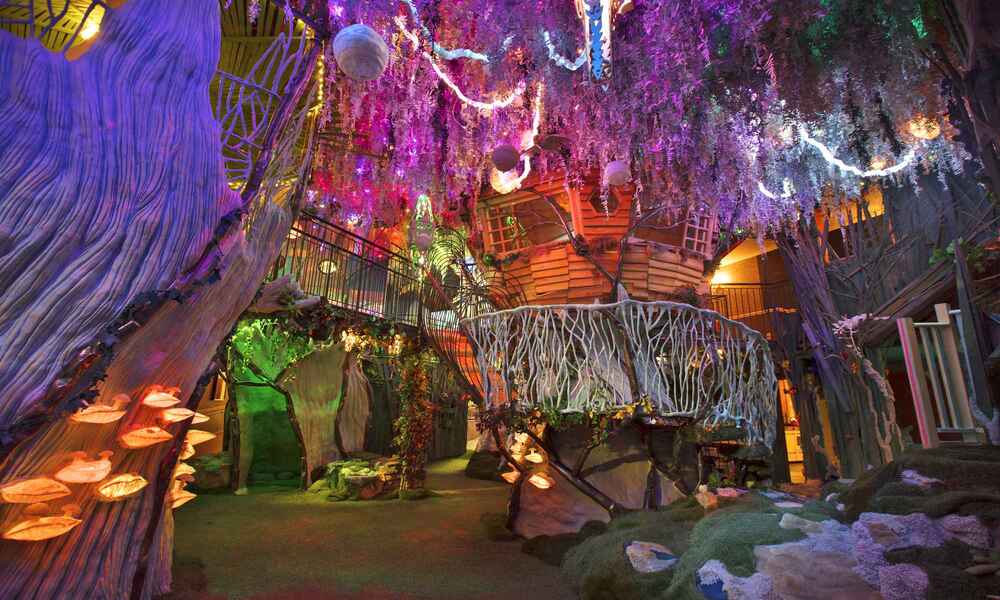
The gold standard of immersive art. Walk through psychedelic worlds where every door leads to another dimension. The House of Eternal Return in Santa Fe starts in a Victorian house and spirals into a multiverse. Omega Mart in Las Vegas is a surreal supermarket. Convergence Station in Denver spans four alien worlds.
The Escape Game — Multiple Locations
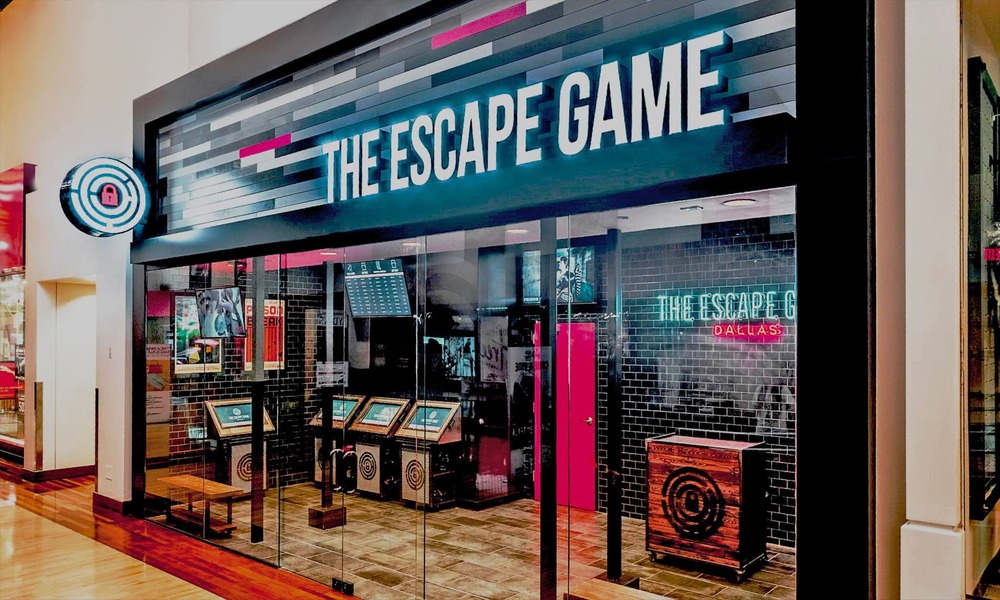
One of the most consistently excellent escape room chains in the country. Highly themed rooms with movie-quality sets and creative puzzles. Prison Break, Gold Rush, and Playground are standout experiences. Locations in major cities and tourist destinations nationwide.
Sandbox VR — Multiple Locations
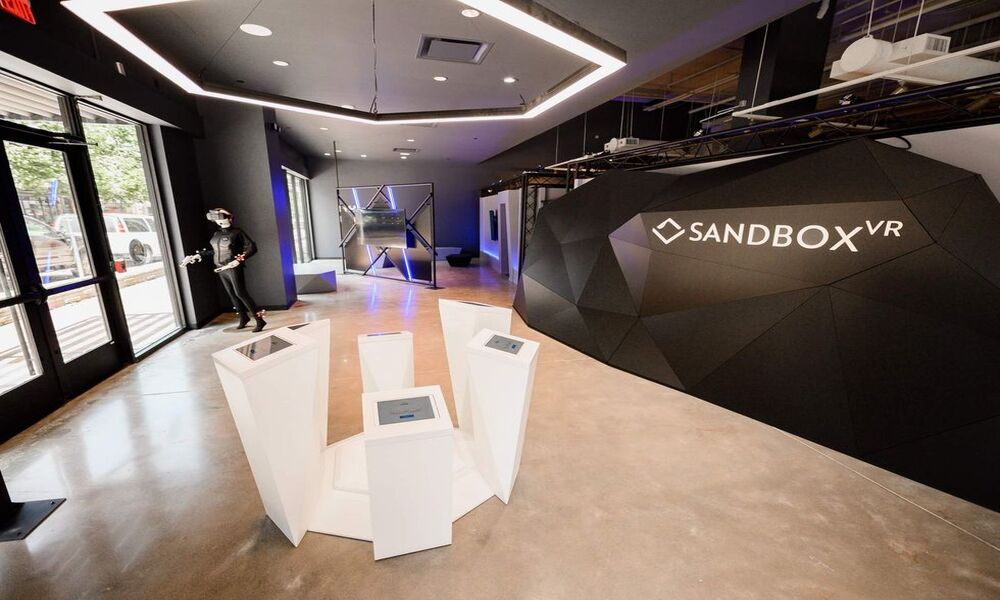
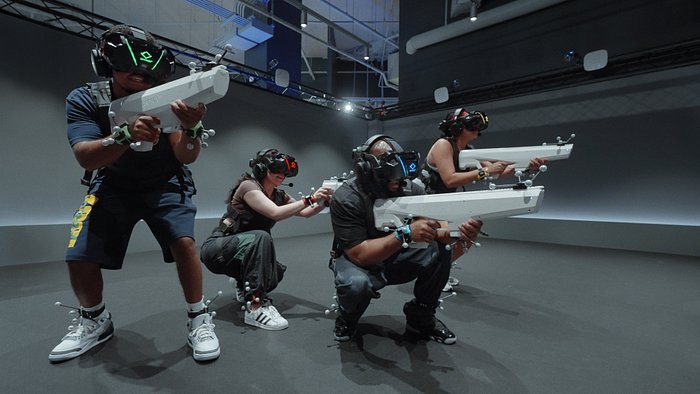
A fully immersive virtual reality experience where groups of up to six people suit up with motion-capture gear and enter a shared virtual world. Battle zombies, explore alien planets, or solve mysteries together. The tech is impressive, and the social aspect makes it ideal for groups.
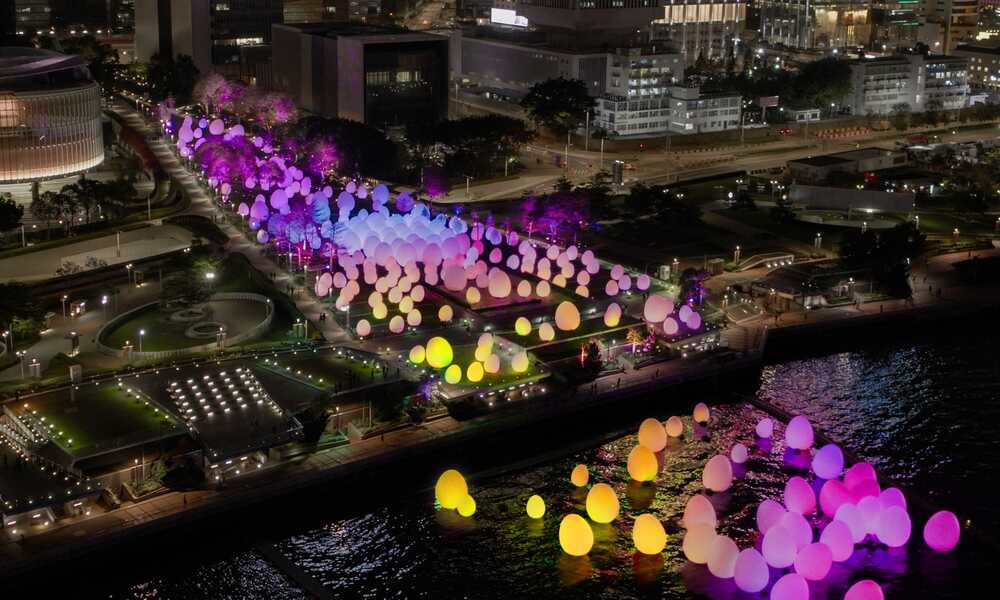
teamLab — Multiple Cities
A global phenomenon from Japan with locations and touring exhibitions across the US. Digital projections transform rooms into fields of flowers, oceans of light, and forests of responsive color. Every surface reacts to your presence. Stunningly beautiful and deeply popular on social media.
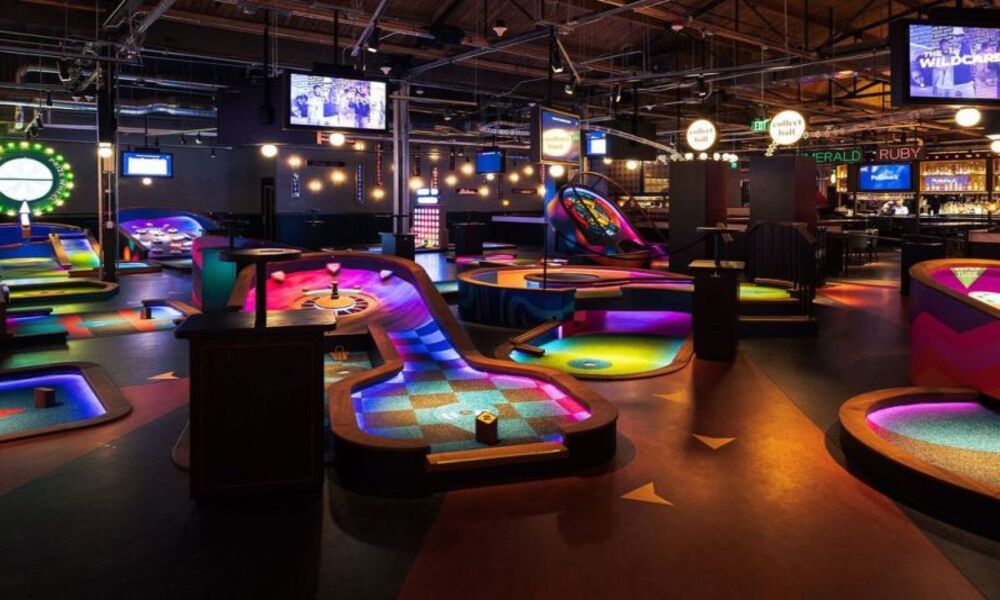
Puttshack — Multiple Locations
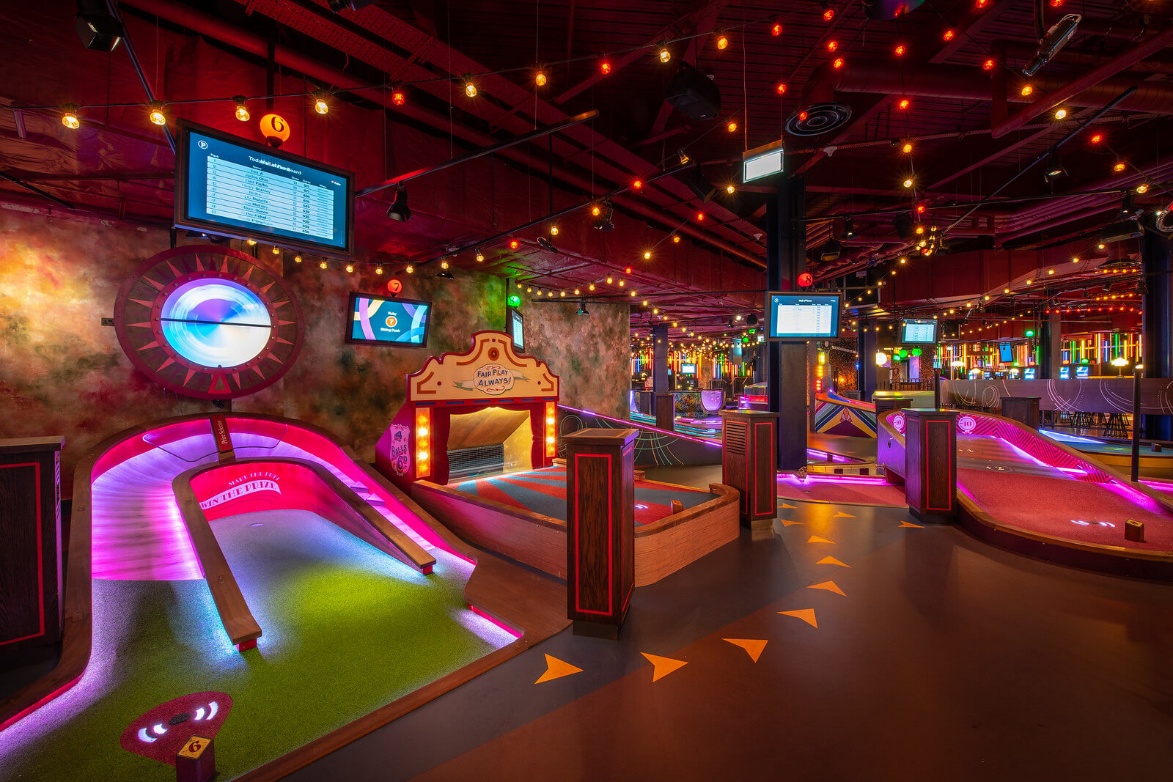
Upscale mini golf reinvented with digital scoring, automated leaderboards, and a high-energy club atmosphere. The ball tracks itself. Cocktails are excellent. Locations in major cities including Chicago, Atlanta, Miami, and Boston.
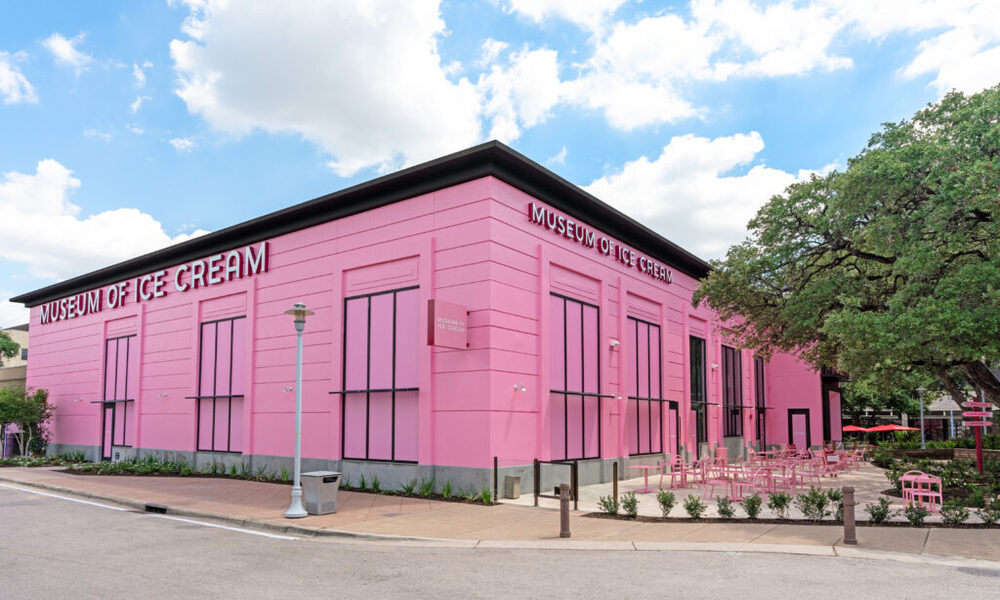
Museum of Ice Cream — Multiple Cities
A photogenic wonderland built around everyone's favorite dessert. Walk through rooms of giant popsicles, a sprinkle pool, and interactive ice cream-themed installations. Samples included. Locations in New York, Chicago, Austin, and Singapore. Designed for Instagram.
Booking, Group Size, and Pro Tips for Interactive Attractions
Interactive experiences operate differently from traditional attractions. Most require advance reservations, especially on weekends. Walk-up availability is rare. Book online as early as possible — popular time slots at Meow Wolf, The Escape Game, and Sandbox VR fill days or weeks ahead. Some venues release tickets in blocks, so if your preferred date is sold out, check back periodically as they may add capacity or experience cancellations that free up spots.
Group size matters significantly and can make or break your experience. Escape rooms typically accommodate 2 to 10 players per room, and the experience changes based on group size. Too few people can make puzzles harder because there aren’t enough hands and minds working simultaneously on multiple elements of a challenge. Too many can feel crowded, especially in smaller rooms, and can lead to some people standing around while others dominate the puzzle-solving. Four to six is the sweet spot for most escape rooms — large enough to tackle complex challenges but small enough that everyone stays engaged and contributes. VR experiences like Sandbox VR work best with groups of 4 to 6 because the full team fills the virtual world and the scenarios are designed with that player count in mind — having fewer players can make cooperative missions harder while more players might mean waiting for equipment. Immersive art experiences like Meow Wolf and teamLab can be enjoyed solo, as a couple, or in a group — there is no right size, just different experiences. Solo visitors can move at their own pace and follow their curiosity without negotiating with others. Couples create intimate shared discoveries. Larger groups generate energy and collective excitement but may split up naturally as different members gravitate toward different areas.
Arrive on time, not late. Escape rooms and VR sessions have fixed start times because they need to reset rooms between groups and maintain a schedule throughout the day. Being late usually means a shorter experience or forfeiting your slot entirely, and refunds are rarely offered for late arrivals. Most venues recommend arriving 15 minutes early for check-in and instructions, which may include safety briefings for VR experiences or narrative setup for escape rooms. This buffer also accounts for parking challenges in urban locations and ensures your group is complete and ready when your start time arrives.
Read the age and accessibility guidelines before booking. Some experiences have minimum age requirements — VR experiences often require participants to be at least 10 or 12 years old due to headset fit and motion sensitivity concerns. Physical activity expectations vary widely: some escape rooms involve crawling, climbing, or extended periods of standing, while others are fully accessible. Content ratings matter too — certain themes involve horror elements, darkness, loud noises, or mature subject matter that may not suit all audiences. If anyone in your group has mobility limitations, claustrophobia, epilepsy, or sensitivity to flashing lights, contact the venue directly before booking to discuss accommodations and determine if the experience is appropriate.
Pricing varies widely depending on location, duration, and production value. Escape rooms typically cost $30 to $50 per person, with premium rooms at higher price points. VR experiences range from $40 to $60 per person for a 30-minute session, though some venues offer hourly packages or multi-experience bundles that reduce the per-session cost. Immersive art venues are $25 to $55 per person and allow longer stays — Meow Wolf visitors often spend 2 to 3 hours exploring, making the per-hour cost more reasonable than it initially appears. Group rates, student discounts, and off-peak pricing are common, with weekday daytime slots sometimes offering significant savings compared to Friday and Saturday evenings. Check the venue website for current pricing and packages, and look for combo deals if you’re planning to visit multiple attractions in the same city.
Most interactive attractions are indoors and air-conditioned, making them excellent options for hot, rainy, or cold days when outdoor activities become uncomfortable. They are popular with both tourists and locals, creating a mixed crowd that adds to the energy, and many are located near restaurants and bars — easy to combine with dinner or drinks afterward. This clustering in entertainment districts means you can structure an entire evening around the experience, with dinner before and cocktails after to debrief and relive the highlights.
Consider the timing of your visit within your trip. Interactive experiences work well as mid-trip breaks from theme parks or outdoor activities. They provide variety and give your group something different to talk about. They’re also excellent backup plans — if weather cancels your beach day or hiking plans, having a reservation at an interactive attraction saves the day. Some experiences, particularly immersive art installations, reward repeat visits because you’ll notice different details and explore different paths each time.
Meow Wolf — The Immersive Art Phenomenon
Meow Wolf began in Santa Fe, New Mexico, as a collective of artists who wanted to create something entirely new — an art experience that rejected the “don’t touch” mentality of traditional galleries and instead invited visitors to open every drawer, press every button, and crawl through every portal. With support from Game of Thrones author George R.R. Martin, who donated a former bowling alley and provided crucial funding, they built The House of Eternal Return — a Victorian house where every closet, refrigerator, and fireplace leads to another dimension. It opened in 2016 and changed the conversation about what an art experience could be, proving that audiences were hungry for participatory art that prioritized exploration and discovery over passive observation.
The concept is difficult to describe because it defies traditional categories — it’s part art installation, part puzzle box, part narrative experience, and part playground. You walk through a seemingly normal house that serves as the entry point. You open a refrigerator door and crawl through into a neon forest populated by glowing plants and strange sounds. You climb a staircase that turns into a spaceship corridor lined with blinking control panels. Every room is a different artist’s vision, connected by a loose narrative thread that reveals itself as you explore — the story of a family that discovered portals to other dimensions, with clues hidden in documents, answering machine messages, and environmental details. There is no correct path, no time limit, and no guide telling you where to go or what it means. You discover at your own pace, following your curiosity and creating your own journey through interconnected worlds that range from psychedelic forests to industrial hellscapes to whimsical cartoon dimensions.
The interactive elements vary from simple (climbing through tunnels) to complex (musical instruments that control lighting effects, computer terminals with mysterious files, hidden buttons that trigger environmental changes). Some visitors treat it as a visual spectacle, taking photos and moving through quickly. Others spend hours trying to piece together the narrative mystery, taking notes and comparing discoveries. Both approaches are valid — the experience adapts to what you bring to it.
The Santa Fe location remains the original and largest, occupying over 20,000 square feet of constantly surprising environments. It has become New Mexico’s second-most-visited attraction after Carlsbad Caverns, drawing visitors from around the world who might not otherwise have Santa Fe on their radar. Omega Mart in Las Vegas takes the form of a surreal supermarket where every product is a joke, a puzzle, or a portal — the box of “Diet Oops! All Bugs!” cereal and “Toe Bean Snax” sit on shelves alongside functional art pieces, and passing through a freezer door transports you into a corporate conspiracy narrative involving mysterious portals and dimensional experimentation. The Las Vegas location, housed within Area15, a dedicated immersive entertainment complex, has quickly become one of the city’s most talked-about attractions beyond the Strip casinos. Convergence Station in Denver is the newest permanent location, spanning four alien worlds connected by a transit station, each world designed by different artist teams to create distinct aesthetic and emotional environments ranging from whimsical to slightly sinister. The Houston location opened in 2024, continuing Meow Wolf’s expansion into major markets across the country.
Tickets are $30 to $55 depending on location and time, with dynamic pricing that increases during peak periods. Advance purchase is strongly recommended — peak times sell out days or even weeks ahead, particularly during summer months and school holidays. Plan to spend 2 to 3 hours exploring, though some obsessive visitors have reported staying four or five hours trying to uncover every secret. The venues have bars serving creative cocktails and food options ranging from snacks to full meals, allowing you to refuel without leaving. Meow Wolf is suitable for all ages, though some areas are dark, include strobe effects, or feature intense imagery that might overwhelm very young children. Parents know their kids best — adventurous five-year-olds may love it while more cautious eight-year-olds might find it overstimulating. It is one of the most original experiences in America, representing a new model for what art can be when it prioritizes engagement and exploration over contemplation and reverence.
Escape Rooms, Social Darts, and High-Tech Mini Golf
Escape rooms have evolved from simple locked boxes with padlocks into highly produced immersive experiences that rival film sets in production value. The Escape Game is one of the best chains, with locations in over a dozen cities including Orlando, Nashville, Las Vegas, and New York, and a reputation for theatrical set design and clever puzzle progression. Each room is a movie-quality set with physical puzzles, hidden doors, and a 60-minute timer that creates just enough pressure to make success feel genuinely rewarding. Prison Break — a multi-room challenge that starts in a jail cell and requires your team to escape not just one room but multiple connected spaces — is their signature experience and showcases what modern escape rooms can achieve in terms of storytelling and spatial design. Difficulty levels and themes vary, from family-friendly adventures to intense challenges designed for experienced players, and staff can provide hints through screens or speakers if your group gets stuck without breaking the immersion.
The quality difference between top-tier escape room companies and budget operations is substantial. The best rooms feature automated elements like walls that slide open when you solve puzzles, lighting that changes to reflect story progression, and audio that provides atmospheric storytelling without relying on a gamemaster narrating over a speaker. Lesser rooms rely heavily on combination locks and feel more like a series of disconnected puzzles than a coherent experience. Research before booking — read reviews, look at production photos, and prioritize companies that invest in narrative and immersion.
The escape room boom has spawned related experiences that apply the same collaborative, time-pressured format to new settings. Boda Borg in Boston offers a series of physical and mental challenges called Quests housed in a warehouse-style facility. There are no instructions — you enter a room and figure out what to do based entirely on environmental clues and trial and error. It could be climbing over obstacles, balancing across narrow beams, solving a puzzle embedded in the room’s architecture, or something else entirely that you only understand by attempting and failing. The rooms reset automatically when you fail, allowing immediate retries. Groups of 3 to 5 people work best because you need enough people to tackle physical challenges but not so many that the small rooms become chaotic. You buy time rather than individual quests — a day pass allows you to attempt as many quests as you can fit into your session, encouraging quick thinking and efficient problem-solving.
Competitive socializing venues have exploded in popularity, particularly in urban markets with younger professional demographics. Puttshack and Swingers take mini golf and add digital scoring systems that track every shot via sensors in the balls and holes, creative course design that incorporates interactive obstacles like pitching games between holes, and craft cocktails served at your bay. The experience feels less like traditional mini golf and more like a tech-forward social event where the golf provides structure but the real purpose is hanging out with friends in an energetic environment. Flight Club and F1 Arcade bring the same energy to darts and racing simulators, respectively, removing the intimidation factor of traditional dart leagues and professional racing games by making everything accessible and social. Flight Club uses digital dart boards that offer dozens of game variations designed for groups of mixed skill levels, ensuring that beginners and experts can compete on more equal footing. F1 Arcade combines racing simulators with restaurant service, allowing groups to compete in races while eating full meals and drinking — a combination that traditional arcades never achieved.
These venues are designed for groups, with food and drink service integrated into the gameplay rather than separated into a dining area. Servers bring drinks directly to your dart station or mini golf bay. You order food via table tablets without interrupting your game. The lighting is moody rather than bright, the music is loud enough to create energy without preventing conversation, and the design emphasizes Instagram-worthy moments with neon signs and stylish decor. They are ideal for date nights where you want an activity to prevent awkward silences, friend gatherings celebrating birthdays or promotions, and casual celebrations that don’t require formal dinner reservations.
The common thread across all these experiences is participation. You are not watching a screen or walking through a gallery where your presence doesn’t affect anything. You are inside the experience, working with your group, solving something, creating something, or just laughing at how badly you just missed that dart shot. In a world where so much entertainment is passive — streaming shows on your couch, scrolling through social media, even many theme park rides where you sit and observe — interactive experiences offer something genuinely different. They demand your attention, reward your creativity, and create shared memories based on what you did rather than what you watched. The best interactive experiences understand that the real product isn’t the rooms or the technology but the feeling of accomplishment when you solve something together, the inside jokes that emerge from failures, and the stories you’ll tell afterward that start with “remember when we…”
Frequently Asked Questions
Are escape rooms scary?
Most are not. The majority of escape rooms are puzzle-focused with no horror elements. Some are specifically designed as horror experiences and are clearly labeled. Check the theme and age recommendation before booking. Prison break, heist, and adventure rooms are typically family-friendly.
Can I do these experiences alone?
Immersive art experiences like Meow Wolf and teamLab can be enjoyed solo. Escape rooms and VR experiences require a minimum group size, typically 2 to 4 people. Some venues allow single participants to join existing groups, but this varies by location.
Are interactive experiences good for kids?
Many are. Immersive art venues are excellent for all ages. Some escape rooms and VR experiences have age minimums, usually 10 or 12 years old. Check the specific venue’s guidelines. Family-friendly options are widely available.
How far in advance should I book?
For popular experiences on weekends, book at least a week in advance. Meow Wolf holiday periods and The Escape Game Saturday slots can sell out two weeks ahead. Weekday slots are generally easier to book on shorter notice.
What should I wear to an interactive experience?
Comfortable clothing and closed-toe shoes. Escape rooms may involve crawling or bending. VR experiences involve movement — avoid dresses or restrictive clothing. Immersive art venues like Meow Wolf involve significant walking and occasional climbing through tight spaces.
Are these experiences accessible for people with disabilities?
Varies by venue. Most immersive art venues are wheelchair accessible. Some escape rooms and VR experiences have physical requirements. Contact the specific venue before booking if you have accessibility concerns. Many venues are working to improve accessibility as the industry matures.