
Theme Park Accessibility Guides: Services, Accommodations, and Tips for Every Park
A comprehensive guide to accessibility at America's theme parks — disability passes, wheelchair rentals, sensory-friendly services, and everything you need for a comfortable visit.
Disability Access Programs
How to register for DAS at Disney, AAP at Universal, and equivalent programs at every major park.
Ride Accessibility by Park
Which attractions accommodate wheelchairs, which require transfers, and how to navigate queues with mobility devices.
Sensory-Friendly Services
Quiet rooms, low-sensory hours, noise-canceling headphones, and resources for guests with autism and sensory sensitivities.
Hearing & Visual Accommodations
Sign language interpretation, closed captioning, audio description, and Braille guides available at major parks.
Planning Resources
Pre-visit guides, accessibility maps, and how to contact each park's accessibility team before your trip.
Everyone Deserves a Magical Day — Accessibility at America's Theme Parks
Theme parks are designed for joy, wonder, and unforgettable family memories, but they can also present significant challenges for guests with disabilities. Long waits in crowded, noisy queues that stretch for what feels like miles. Attractions with narrow paths, multiple flights of stairs, or sudden movements. Sensory environments filled with flashing lights, loud music, and overwhelming stimuli that can trigger anxiety or sensory overload. Physical barriers that make simple tasks like boarding a ride or finding a restroom monumentally difficult.
The good news is that America’s major theme parks have invested heavily in accessibility programs over the past decade, and with proper planning and knowledge of available resources, guests with disabilities can have an exceptional, memorable experience that rivals any able-bodied visitor. Parks have moved far beyond basic compliance with the Americans with Disabilities Act, developing comprehensive programs that address mobility needs, sensory sensitivities, visual and hearing impairments, and cognitive disabilities.
Every major park now offers some form of disability access program designed to level the playing field. Disney’s Disability Access Service and Universal’s Attraction Assistance Pass allow guests who cannot wait in traditional queues due to disability-related needs to receive return times and enter through alternate access points. These programs have evolved significantly in recent years, moving to digital registration systems, implementing video chat pre-registration, and establishing stricter eligibility requirements to prevent abuse while better serving those who genuinely need accommodations. Understanding how these systems work before you arrive saves enormous amounts of time, reduces frustration, and maximizes your park experience.
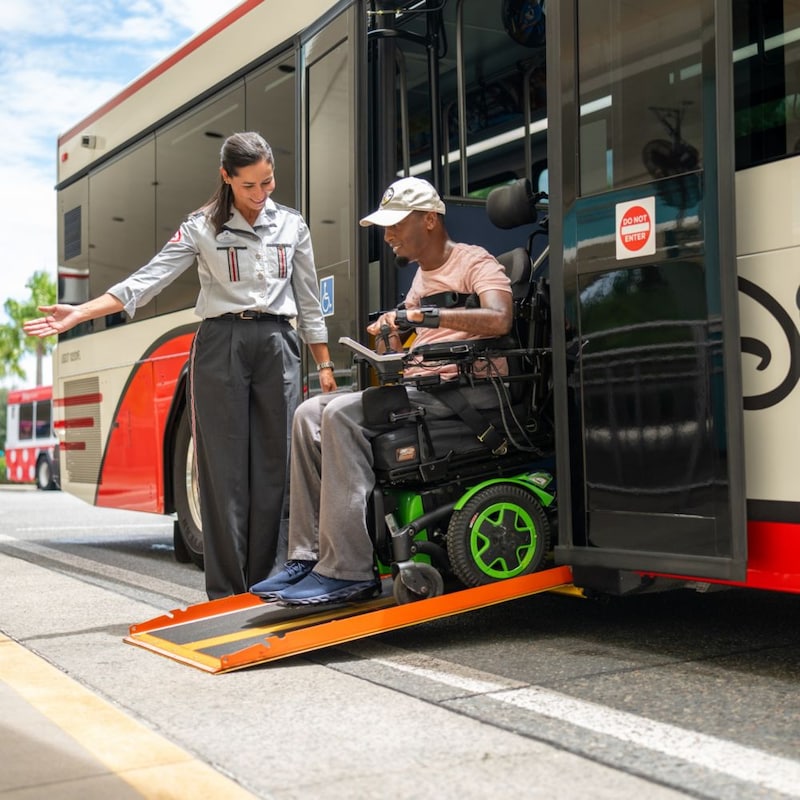
Beyond queue accommodations, parks offer an impressive array of services: wheelchair and electric scooter rentals available at park entrances, accessible transportation including buses with wheelchair lifts and boats with ramps, American Sign Language interpretation services for shows and character experiences, audio description devices that narrate visual elements of attractions, quiet rooms specifically designed for sensory breaks, and detailed accessibility guides available in print and digital formats that describe every attraction’s specific requirements. Restaurant menus accommodate dietary restrictions related to medical conditions such as celiac disease and diabetes, with chefs trained to handle special requests. First aid stations staffed with registered nurses can store medications that require refrigeration and provide a quiet place to rest. Service animals are not just permitted but welcomed at all major parks, with designated relief areas conveniently located and clearly marked on park maps.
This comprehensive guide covers the accessibility programs, services, and practical strategies at major theme parks across the United States. It is designed for guests with mobility disabilities ranging from temporary injuries to permanent conditions, sensory sensitivities including autism spectrum disorders, hearing or visual impairments, and other conditions that affect the park experience. Because the best day at a theme park is one where everyone—regardless of ability—can participate fully, create lasting memories, and experience the magic that these destinations promise.
Disability Access Programs — How They Work at Every Major Park
Disability access programs are specifically designed for guests who cannot wait in a traditional standby queue due to a disability that makes standing for extended periods, navigating crowded spaces, or tolerating sensory stimuli extremely difficult or impossible. It’s crucial to understand from the outset that these programs are not intended to skip lines, provide VIP treatment, or grant immediate access to attractions. Rather, they provide a return time based on the current standby wait, allowing the guest to wait in a more comfortable environment such as a shaded seating area, air-conditioned restaurant, or quiet space away from crowds while their virtual place in line is held.
Disney’s Disability Access Service is the most well-known program in the accessibility community. DAS is available at both Walt Disney World and Disneyland Resort for guests with developmental disabilities, autism spectrum disorders, anxiety disorders, and similar conditions that make waiting in a traditional line environment extremely challenging. It is important to note that DAS is not available for mobility-only disabilities—wheelchair-accessible queues and alternate entrances address those needs separately. The distinction exists because Disney has invested significantly in making queue environments wheelchair accessible, with ramps, wider pathways, and transfer points clearly marked.
Registration for DAS has changed significantly. Disney now requires advance registration via video chat, which can be completed 2-30 days before your park visit. You’ll connect with a Cast Member through a live video call where you’ll discuss your needs privately and confidentially. The Cast Member is trained to ask appropriate questions without requiring medical documentation or diagnosis disclosure, though explaining your specific challenges helps them understand how DAS can assist you. If approved, your DAS registration is linked to your My Disney Experience account and remains active for the length of your ticket or up to 60 days for annual passholders. Same-day registration is still available at Guest Relations for guests unable to complete advance registration, though wait times can exceed an hour during peak periods.
Once registered and in the park, using DAS is straightforward through the My Disney Experience app. You select a ride you wish to experience, and the app issues a return time equal to the current standby wait minus 10 minutes. For example, if Space Mountain has a 60-minute wait, your return time will be in 50 minutes. During that waiting period, you’re free to enjoy restaurants, shops, watch shows, meet characters, or experience attractions with shorter waits. When your return time arrives, you’ll enter through the Lightning Lane entrance with your party. You can only hold one DAS return time at a time, but you can make additional Lightning Lane purchases or use other park services simultaneously. DAS also allows two advance selections per day, bookable 7 days in advance, which is invaluable for popular attractions.
Universal Orlando’s Attraction Assistance Pass works on similar principles with some implementation differences. Registration occurs at Guest Services near the park entrance. You’ll speak privately with a trained team member who will ask about your specific needs and challenges. Based on that conversation, they determine the appropriate accommodation level. Universal’s program is more flexible in some ways—it accommodates both guests who cannot wait in traditional queues and those with mobility challenges who need alternate access but can tolerate queue environments.
The AAP card is a physical document that team members at attraction entrances will reference. At attractions where the queue cannot accommodate your needs, ride attendants will issue a return time written directly on your card. At other attractions where the queue is accessible but the boarding area presents challenges, you may be directed immediately to an accessible entrance or elevator. Universal also offers a separate Pass specifically for mobility needs that provides elevator access at multi-level attractions. This dual-program approach allows Universal to serve different disability types more precisely.
SeaWorld and Busch Gardens use a Ride Accessibility Program that takes a more personalized approach. Guests register at the Information Center, where accessibility coordinators conduct a detailed conversation about specific needs, limitations, and goals for the visit. Rather than a one-size-fits-all approach, you receive a personalized document listing attractions with specific guidance on which rides are suitable for your condition, which may require transfers, and which should be avoided for safety reasons. Return times are issued for rides where the main queue is not accessible, and immediate alternate access is provided where queues can accommodate your needs. This program works particularly well for guests with complex medical conditions or multiple accommodation needs.
Regional parks like Six Flags properties, Cedar Fair parks including Cedar Point and Knott’s Berry Farm, and independent parks have varying programs that differ significantly by location. Most offer an Attraction Accessibility Pass or Boarding Pass obtained at Guest Services. These typically provide return times for attractions where waits exceed a certain threshold or immediate alternate entry at participating rides. However, consistency varies dramatically. Some parks have robust programs comparable to Disney or Universal, while others have minimal accommodations and undertrained staff. Check the specific park’s website before your visit, call ahead to discuss your specific needs, and read recent reviews from disability advocacy groups to set appropriate expectations.
Wheelchairs, Scooters, and Navigating the Parks
Theme parks involve enormous amounts of walking—the average guest walks 7-10 miles in a single day at Walt Disney World, and even smaller regional parks require 3-5 miles of walking. Navigating these vast properties with a mobility device requires additional planning, energy management, and knowledge of park layouts. The positive news is that all major parks are wheelchair accessible with ramps instead of stairs wherever possible, elevators at multi-level attractions and transportation hubs, wide pathways that accommodate mobility devices, and accessible restrooms distributed throughout every land. Most rides can accommodate wheelchairs or ECVs (electric convenience vehicles, commonly called scooters) in the queue itself, though some require a transfer from your mobility device to the ride vehicle.
Wheelchair and scooter rentals are available at every major park, typically near the main entrance. At Walt Disney World, standard manual wheelchairs rent for $12 per day and ECVs for $50 per day plus a refundable deposit. Universal, SeaWorld, and most regional parks have similar pricing, ranging from $10-15 for wheelchairs and $45-60 for scooters. Park rentals are first-come, first-served with no advance reservations possible. During peak seasons like summer vacation and major holidays, scooters often run out by mid-morning.
Disney and Universal also partner with third-party rental companies that deliver mobility equipment directly to your hotel or vacation rental. Companies like ScooterBug and Walker Mobility operate throughout Orlando and Southern California. Third-party rentals are typically cheaper on a per-day basis (often $30-40 per day for multi-day rentals), offer better quality equipment with more comfortable seats and longer battery life, and are guaranteed—you reserve in advance so equipment is waiting when you arrive. The scooters are also yours for your entire trip, meaning you have transportation at your hotel, in parking lots, and at non-park destinations.
Ride access varies significantly by attraction type and age. Modern attractions built in the past 15 years almost universally feature fully accessible queues where wheelchairs and scooters can navigate the entire line, often with dedicated wheelchair queues that bypass stairs. These rides often feature level boarding where the ride vehicle aligns with the platform, making transfers easier or unnecessary.
Other attractions require a transfer to a manual wheelchair at a certain point in the queue, typically where the queue becomes narrow or involves tight turns that ECVs cannot navigate. Cast members at these transfer points provide manual wheelchairs and assistance. A smaller number of older attractions, particularly classic rides built before modern accessibility standards, require guests to negotiate stairs or narrow paths—these attractions are specifically noted on each park’s accessibility guide with detailed descriptions of physical requirements.
At rides where the queue cannot accommodate a wheelchair or ECV, guests typically enter through the exit or a dedicated accessible entrance. The procedure is straightforward: approach the main entrance, speak with the ride attendant, and explain that you need accessible access. They will provide specific instructions, which might include entering immediately through an alternate entrance, waiting in a designated accessible area, or receiving a return time if the alternate entrance is temporarily occupied.
For guests who can walk but cannot stand for long periods—common with conditions like arthritis, chronic pain, or recovery from surgery—a rollator walker with a built-in seat provides a portable place to rest in queues while maintaining mobility. Most theme park queues are wheelchair accessible with wide pathways but lack any seating until you reach the boarding area, which can mean 30-60 minutes of standing. A lightweight portable stool or cane seat can be helpful for shorter waits and provides rest options in non-queue situations. However, large folding chairs and camping stools are generally prohibited in queues due to space constraints, though they can be used in designated viewing areas for shows and fireworks.
Sensory-Friendly Services and Resources for Neurodivergent Guests
Theme parks are extraordinarily intense sensory environments—massive crowds numbering in the tens of thousands, constant noise from music and announcements, flashing lights and projection effects, distinctive smells, and unpredictable stimuli at every turn from characters appearing suddenly to unexpected pyrotechnics. For guests with autism spectrum disorders, sensory processing disorders, anxiety disorders, or PTSD, this sensory assault can quickly escalate from uncomfortable to completely overwhelming, triggering meltdowns, panic attacks, or shutdowns that end the park day prematurely.
Recognizing this challenge, parks have responded with increasingly sophisticated resources designed to help neurodivergent guests and their families prepare, cope, and enjoy their visits. Disney and Universal have both been certified as autism-friendly destinations by organizations like the International Board of Credentialing and Continuing Education Standards, which conducts staff training and audits facilities to ensure appropriate accommodations.
Both Disney and Universal publish detailed sensory guides for every single attraction, rating the intensity of various sensory elements on a simple, clear scale. These guides indicate the level of darkness (complete darkness vs. dim lighting), loud noises (sudden loud sounds vs. consistent volume), flashing or strobe lights, strong smells, water effects that might surprise guests, sudden movements or drops, and other sensory considerations. Each element is rated on a scale, allowing families to make informed decisions about which rides are appropriate for their specific sensory profiles and which to avoid. For example, a child who struggles with sudden loud noises might avoid attractions with fireworks or unexpected sound effects but enjoy rides with consistent background music. These guides are available as downloadable PDFs on park websites and often as printed booklets at Guest Relations.
Quiet rooms and designated break spaces are available at Disney and Universal, though they are not widely advertised on park maps. These are low-stimulation environments with soft lighting, reduced noise levels (often with white noise machines), comfortable seating, and sometimes sensory toys or fidgets. They provide a place for guests to decompress, regulate, and recover from sensory overload without leaving the park entirely. At Disney World, these spaces are located in specific areas—ask at Guest Relations for current locations. The First Aid stations at both Disney and Universal also serve this purpose, offering quiet rooms with nursing staff available if medical support is needed. Some parks have begun identifying designated quiet areas on park maps, usually gardens or shaded seating away from major attractions.
Sensory-friendly hours and special events are offered periodically throughout the year, though availability varies by park and season. Disney’s After Hours events, while primarily marketed as low-crowd experiences, provide enormous sensory benefits with attendance capped at a fraction of regular capacity, resulting in minimal wait times, reduced noise, and more personal space. Some regional parks including Six Flags, SeaWorld properties, and Sesame Place offer dedicated autism-friendly days or sensory-friendly hours, typically scheduled early in the operating season. During these events, parks reduce sound system volumes, eliminate or modify flashing lights, provide quiet rooms and sensory bags, and extensively train staff on supporting neurodivergent guests. Character interactions are modified to be less sudden or overwhelming. Check individual park websites and autism advocacy organizations for upcoming dates, as these events often sell out.
Practical sensory management tools can make an enormous difference. Noise-canceling headphones or foam earplugs are strongly recommended for guests with sound sensitivity. Indoor attractions often use dramatic sound systems, fireworks shows reach extremely high decibel levels, and parade music projects over crowd noise. Parks do not provide these items, so bringing your own quality noise-canceling headphones is essential. Weighted blankets, lap pads, and comfort items are permitted in parks and on most attractions. Sunglasses, wide-brimmed hats, and even umbrella shade help with light sensitivity, particularly important in Florida and California sun. Small fidget toys, stress balls, and sensory items help with regulation during waits. Consider creating a “sensory toolkit” bag with all these items plus snacks, water, and anything else that helps your family member stay regulated.
Service animals are welcome at all major theme parks under the Americans with Disabilities Act. Service animals must be dogs (or in rare cases miniature horses) specifically trained to perform tasks related to a person’s disability. They must be harnessed, leashed, or tethered and under the owner’s control at all times. Service animals can accompany guests on most rides, with exceptions for attractions with sudden drops, extreme movements, or confined spaces where the animal’s safety cannot be guaranteed. Designated relief areas are clearly marked on park maps, typically located in landscaped areas away from dining and high-traffic zones, and include waste disposal stations. It’s important to note that emotional support animals, therapy animals, and comfort animals are not recognized as service animals under ADA guidelines and are not permitted in theme parks.
Frequently Asked Questions
How do I register for disability access before my trip?
Disney offers DAS registration via live video chat 30 to 2 days before your visit. Universal, SeaWorld, and most other parks require in-person registration at Guest Services on the day of your visit. Bring documentation if you have it, but parks cannot legally require proof of disability.
Can I bring my own wheelchair or scooter?
Yes. Personal wheelchairs, scooters, and other mobility devices are permitted. They are subject to the same size restrictions as park rentals. Check the park’s website for maximum dimensions.
Are there accessible hotel rooms at park resorts?
Yes. All official park hotels offer accessible rooms with roll-in showers, grab bars, visual fire alarms, and other accommodations. Request an accessible room when booking and confirm directly with the hotel before your stay.
What if I need to store medication?
First Aid stations at all major parks can store medications that require refrigeration. They also provide a quiet place to administer medications or address medical needs. Locations are marked on park maps.
Can I use a stroller as a wheelchair?
Yes. If a guest with a disability uses a stroller as a mobility device, it can be tagged as a wheelchair at Guest Relations. This allows it to be used in queues and other areas where strollers are normally prohibited. The tag is free.
What happens if a ride breaks down while I am on it?
Staff are trained to assist guests with disabilities during evacuations. Rides are evacuated systematically, and staff will provide specific instructions. If you have a mobility device, staff will bring it to the evacuation point. Evacuations from elevated rides may involve stairs — staff will assist.